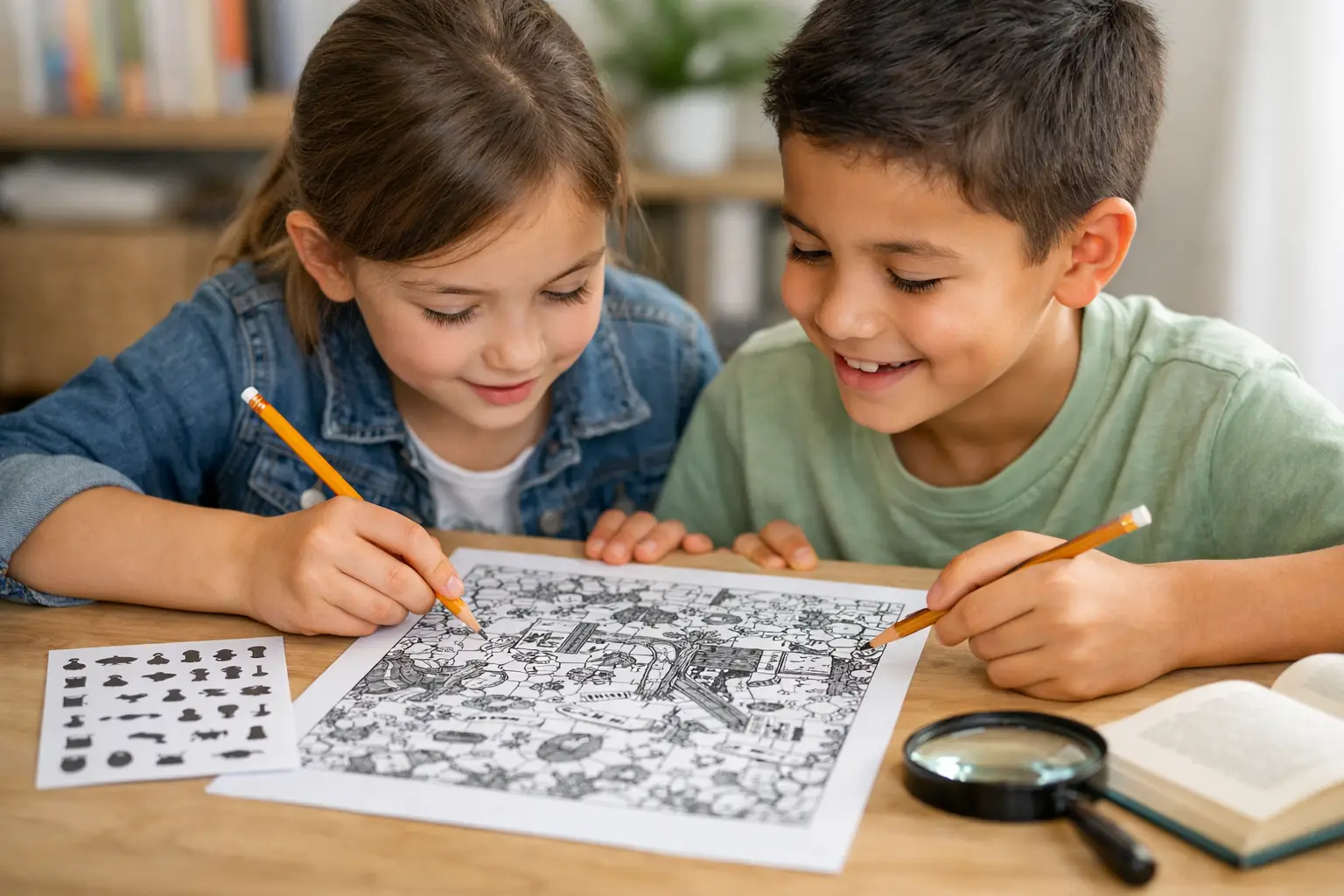
Hidden Picture Puzzles for Children Build Readers
Hidden picture puzzles for children turn close looking into a playful literacy habit, building focus, vocabulary, confidence, and reading joy every day.
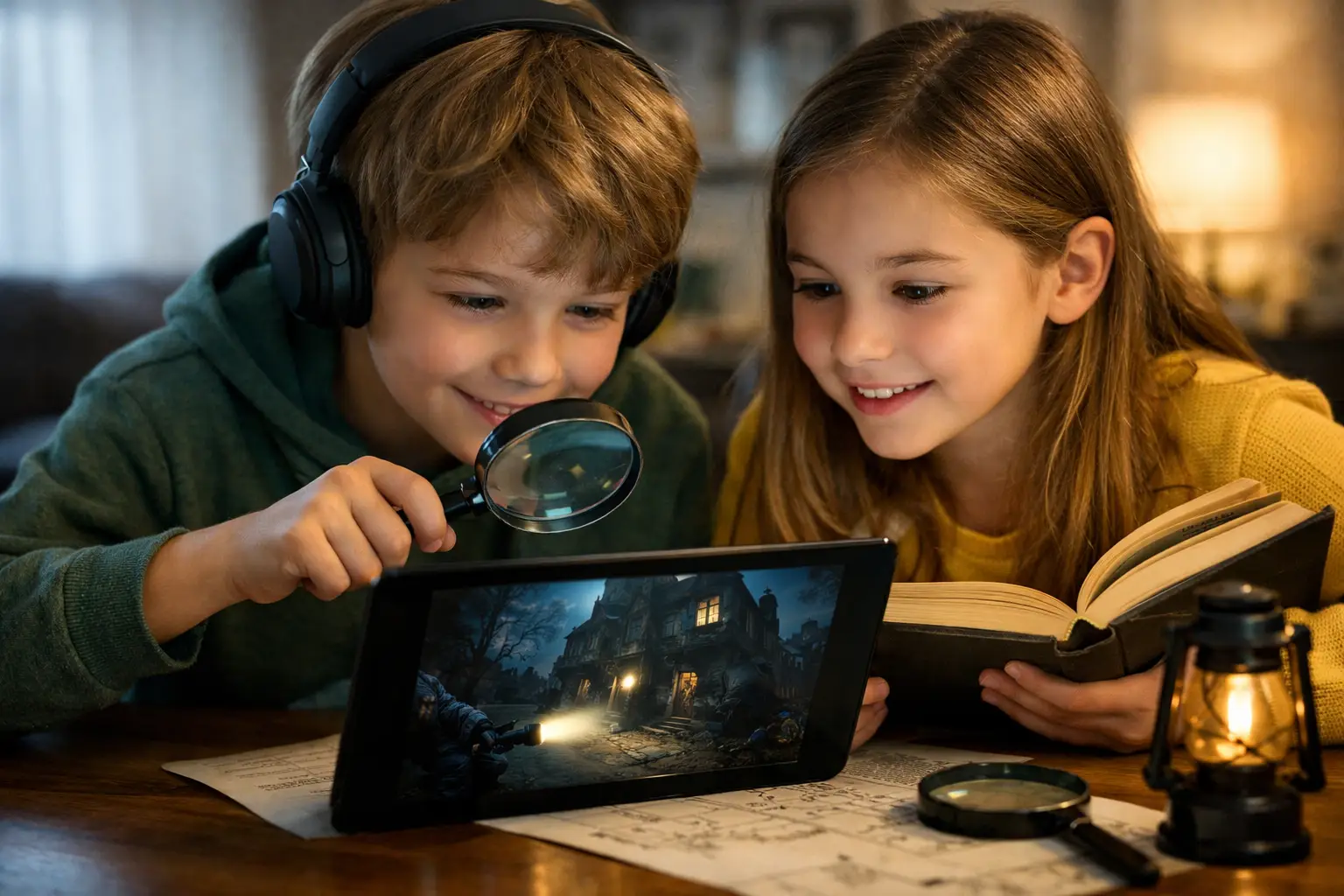
Digital Mystery Games for Kids That Build Readers
Digital mystery games for kids can turn screen time into clue-finding, choice-making reading practice that keeps young readers eager for the next page.
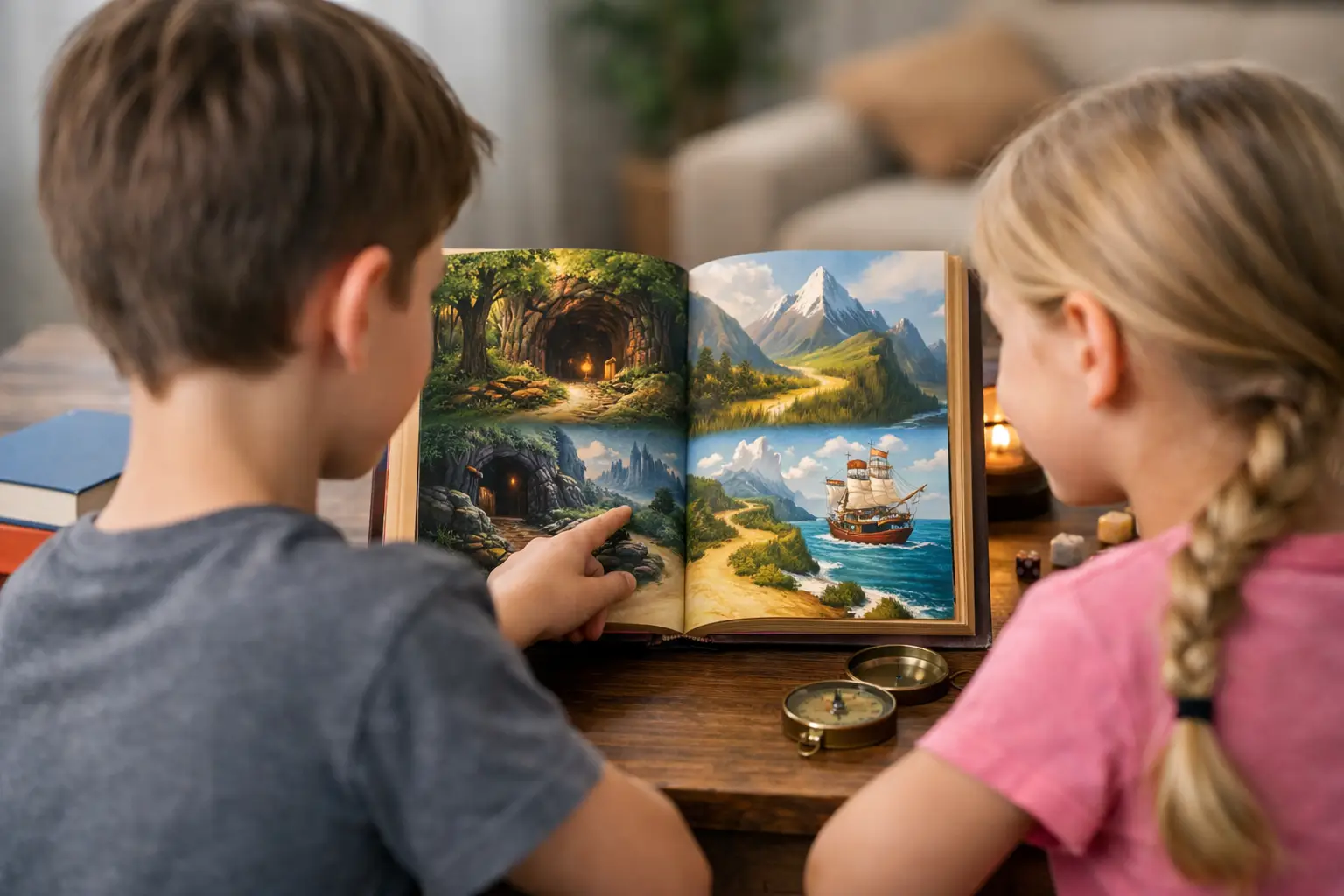
Choose Your Own Path Books That Make Kids Read
Choose your own path books turn reading into a personal adventure, helping ages 5-11 build confidence, curiosity, and a lasting habit of reading joy.
Reading Comprehension Puzzles Kids Want to Solve
Reading comprehension puzzles turn story time into active play, helping children ages 5-11 notice clues, think more, and return to books with confidence.
10 Family Reading Activities That Make Kids Heroes
Try family reading activities that turn stories into games, build confidence, and help reluctant readers choose books, puzzles, and adventures together.
A Smarter Way To Fundraise Through Reading
A Smarter Way to Fundraise Schools depend on fundraising[...]
What Happens When Kids Read Just 20 Minutes Every Day?
School, homework, sports, screentime, family time….when is there time for reading? Parents often wonder when to schedule reading time outside of already busy schedules.
Luckily, it doesn’t take hours of reading to make a huge difference. Research has consistently shown that reading for just 20 minutes a day has a lasting impact on a child’s vocabulary, academic success, imagination, and confidence.
While twenty minutes may not seem like enough to make a difference, over the course of a year, they add up and can make an extraordinary impact.
The Numbers Are Real
Only 20 minutes of reading daily exposes kids to millions of words each year. As children are repeatedly exposed to reading, they naturally build stronger vocabularies, improve spelling, recognize sentence patterns and become more fluent readers.
Compare that to children who rarely read outside of school. The difference in word exposure grows larger every year, creating what educators often call the “reading gap.” The more children read, the easier reading becomes. And when reading feels easier, children are more likely to choose it again.
How Reading Affects The Brain
Reading has so many benefits. It’s one of the few activities that exercises many areas of the brain at the same time.
As children read, they:
- Decode words
- Predicting what will happen next
- Visualize scenes
- Build vocabulary
- Connect ideas
- Remember details
- Practice concentration
Important neural pathways that support learning are strengthened by every page read. Strong readers become strong learners. Nearly every academic subject can be learned more easily when a student is a strong reader.
Building Vocabulary Naturally & Easily
Children could spend time memorizing vocabulary lists, but learning vocabulary through reading allows kids to see words used in meaningful context. Kids begin to understand how words are used in everyday language, as well as what the words mean.
A strong vocabulary helps children:
- Express themselves more clearly
- Understand classroom instruction
- Write more confidently
- Communicate with others effectively
Not only does this build confidence that carries into learning, but also into friendships and everyday life.
Improving Overall Focus
Entertainment today is fast-moving. Children are inundated with notifications, videos, and short spurts of information. Books invite children to slow down. Following a story takes patience and sustained attention. Uninterrupted reading, for just twenty minutes a day, helps children build these skills. They learn how to focus on one task at a time and think deeply. This is an increasingly valuable skill in today’s world.
Encouraging Imagination
Books encourage children to build worlds themselves. Videos, movies, and video games already provide kids with characters and settings, but reading lets children imagine voices, landscapes, emotions, and adventure. Creative thinking like this strengthens imagination and encourages curiosity and problem-solving.
These are skills that benefit children long after they close a book.
Build Confidence
Each time a book is completed, kids think:
“I can do this.”
Success is motivational.
When reading is enjoyable, children identify themselves as readers. Instead of reading because they have to, they begin reading because they want to.
Twenty Minutes Becomes an Adventure
One challenge many parents face isn’t finding twenty minutes—it’s finding books their children actually want to read. Children are naturally more engaged when they become active participants instead of passive readers. Interactive stories, personalized adventures, mysteries to solve, and books that put children into the story can transform reading from a boring task into something genuinely enjoyable.
When reading feels like an adventure, those twenty minutes often become thirty.
The Lasting Impacts
Reading twenty minutes a day won’t change everything overnight.
But over weeks, months, and years, those small daily moments build stronger readers, more confident learners, richer vocabularies, greater imagination, and a lifelong love of books.
The goal isn’t simply to finish more books.
The goal is to help children discover that reading opens doors to places they could never visit any other way.
Twenty minutes is a small investment today—but it can shape a child’s future for years to come.